Monday, April 9, 2012

銀城密碼

很不容易在探弋城火車站找到去銀城的巴士,終於到了下一個梳化主 - 里安度的家。這是明符其實的梳化,有點糟,但好處是可以上網、煮食,里安度也很有善,會帶我們去不同的節目。我們也認識了被遊人忽略的銀城 (La Plata).


很少旅遊書會介紹銀城,其實她是布宜諾斯艾里斯省的首府,其中有不少博物館,城市設計也被認為和共濟會(Freemasonry)有關。這組織被認為和基督教會敵對 (但是他們接受所有宗教, 詳情見 http://en.wikipedia.org/wiki/Freemasonry), 城市設計有很多象徵符號像是和教會對着幹。她的形狀呈菱形,街道全是直角,當中只有少許對角線街道。


大部份街號是數目字,所以一個地址可以是一組數字,遊歷其中好像是達文西密碼尋寶遊戲。例如: 每個方形社區由6X6的小區形成; 當中第五十二街是不在 (五十二街會立即到五十三街),傳聞因為52 -> 2+5=7,七是神權象徵 (你或可聯像之前和6的關係),而這兩條街中間也是大教堂、政府部門如警察、法院、政府總部等所在。對角線所成的方形是黃金比例,城的四方總長度除以對角線街度是圓周率π 。 當中的政府總部屬法式設計,前門設計得像後門,這個"後門"和這個大教堂遙遙對望。


後門像前門

前門像後門, 像哪隻手指?


教堂前的廣場有這個石像,他的無形弓箭是對着教堂。


更多的奇特城市設計和符號關係可以在這裏找到

http://translate.google.com/translate?hl=zh-TW&sl=es&tl=en&u=http%3A%2F%2Fwww.taringa.net%2Fposts%2Finfo%2F1799032%2FCiudad-de-La-Plata-y-masoneria.html

http://translate.google.com/translate?hl=zh-TW&sl=es&tl=en&u=http%3A%2F%2Fsymbolos.com%2Femsebas0.htm

Thursday, April 5, 2012

Watching films in Montevideo


Spending a few days in the suburb Libertad, we were back to Montevideo at another host Daniel. Before we talked more about the stay with him, there were more about this city. We dropped by her international film festival, which the tourist information center did not even know about that. According to Felipe, our friend who met us there, Montevideo has the fifth largest film archive in the world. People could pay a monthly fee to be a member of the film club in the city, then they could watch films in some cinemas for free or at discounted price. He as a member recalled his childhood spending hours watching films. What an enjoyable childhood was that if we could do the same in Hong Kong. We got the brochure and read through like the one for Hong Kong film festival. The scheduling and structure of the brochures (https://docs.google.com/open?id=0B0xD5D59cXlidVZCSlBtZUtpQVU) were quite similar: having themes of particular director, actor/ess (it was Julia Binoche), gala of international films, short films, cartoons, documentary, theme of humanism with Amnesty International etc. Member of the film club only paid an extra of U$130 (about HK52) to watch most films for free and other at U$20. I would be a very happy person if I grew up in a city like this which encouarges film-watching so much. Children can also become film experts from early their early age.

The film we watched was a documentary about a group of mother and family members of political prisoners who were detented and disappeared during dictatorship in this country in 70s. They were transferred between the military governments of Argentina and Uruguay, which co-ordinated with each other (or two birds make a flock). These mothers and families kept demonstrating for justice. We asked Felipe if it was a widespread movement in Montevideo, he said no. Only once a while they shouted out and people supported them. However, to claim responsibility of the military official in the past would imply uplifting the current defense department. Therefore it was a systemic issue that the government should claim an overall remembrance policy. So far not much was done and time kept depleting the chance of facing it directly, when effort needs to pump in continually educating younger generation. I imagine that it would be the same inside mainland China as its dictatorship would not even admit responsibility. Hong Kong became the last base for non-government organization to keep commemorizing although it has become ritualistic (better than none). When shall be our chance of getting justice for June 4 massacre ?

Our second film was supposed to be “Monkey sandwich” by a choreographer Maria knew. She looked forward to the film. However, all thing happen in South America, especially when one puts expectation. The spanish subtitle was 3 minutes ahead of the german/english film that the audience was upset that they kept going forward and complained to the staff. some left. how they solved the problem was to stop the film at the middle (hey, we could still understand !). Either we could get refund or go to see another film. We sneaked into another theatre and it was a hollywood movie of Moore playing as a terminal cancer patient and how she was tackling life before death. At the end we could not sneak into another theatre for another festival film (punk movie by Macedonia). We both were quite upset in this cinema experience: Maria could not watch the film she wanted; I was tortured by the hollywood formula that always it was a happy ending and Whoopie Goldberg playing god (again, I recalled more than once that she was playing something like that).

Only the salted-fried chicken kidney and beer helped us settle the upsetness that night. Anyhow watching films here was a part of life here and that made us like Montevideo more.

Wednesday, April 4, 2012

Museum going in Montevideo


We turned out going to 10 museums in our visits of Montevideo. All have Spanish descriptions only for the exhibits. It is a good practice of our spanish with the iphone dictionary handy.

My most favourite museums were the Museo de Historia del Arte and Museo Nacional de Artes Plasticas y Visuales. Both are free and have rich collection that one day is not enough to see each of them.


Tuesday, April 3, 2012

Long distance hitchhiking in Uruguay

At first we did not succeed in hitch-hiking to Rocha, where the highway number 9 passed and went south to Punte del Este and Montevideo. Many drivers expected us taking bus, which we finally did by hopping to the bus going to Montevideo. We could have taken that bus and went all the way to Montevideo by just paying the full fare, however, an aim of this trip was to practice our hitch-hiking skill. It would be a pity if we did not practicing it before going to the latter part of our South America trip which hitchhiking should be more frequent. Therefore we changed our mind and took off at Rocha. There was supposed to be a couchsurfing host working in a farm there, but he turned out to be an inconsiderate one who left no contact after agreeing to host and actually was in Montevideo, and wasted our time waiting and making false expectation. However, at least we had a chance to join a local Catholic mass. I thought we just let God lead our way and He really did.


After the mass we had some dinner and washed up in the central plaza (taking water from the toilet of the nearby bus company). There were children playing and curious of us being the rare Chinese (expecting us knowing kung-fu). They kept asking us questions and we could only answer some such as where we were from. It was dark and we had to go. After walking for ten blocks back to the highway 9,we passed the gas station where there were several heavy trucks with lights off. I thought even they were on the right direction, the drivers could be sleeping and we may wake them up. The better time may be in the morning when they started off. However, we did not have plan to sleep next to the gas station though it was safer than next to the highway at dark. So we walked away, passed the bus station (there was still bus to Montevideo at 10pm, it was an easy way out but we did not want to take that), and kept thumbs up. We also made a signboard saying “en cualquier lugar hacia la Montevideo” (anywhere towards Montevideo, we were not sure if the Spanish was correct). Vehicles kept passing us.
The planned one came. There was a heavy truck stopping in front of us to buy stuff from the canteen nearby. We were so excited and must "thicken our face-skin". Practising what we should say in spanish “a donde va ?” (where are you going ?), “puedomos ir con usted ?” (can we go with you ?). The driver laughed at us following the words in iphone to ask these questions. He finally brought us, even though we did not know exactly where he was going. He said something like not going to Montevideo but “San Teresa” (we did not know, as long as it was south along highway 9 then it should be fine).


The kitchen at the side of the truck
Our first truck hitch-hiking in South America !!! The driving cart was so high up that we had to climb up the ladder into that. We thought that we could not do that if we were taking very heavy backpacks. The trip of the driver was from Sao Paulo of Brazil. It was a really long way to come here. Due to the high cost of living in Brazil, he cooked his meal on the truck, not in the truck. How ? There were two metal boxes at the side of the truck for storing food and a gas stove respectively. I wondered if the gas stove was actually burning the diesel from the tank ?! The driver wanted some hot water for his mate, so he stopped the truck aside of the highway, went out, got his kitchen ready, got water from the water tank and boiled it. He made us coffee. It was necessary that we stayed awake in the drive, because it didn’t look good to sleep on the way when the driver was giving a free ride. Better if we could speak spanish, we could chat with him. However he seemed to have fun talking to us even though we did not understand most of what he said.

We did not know where he was taking us, so I kept reading the map and got prepared to know where we would be dropped. Finally we were in San Teresa which was only 20km from Montevideo. Then we just paid 43 peso for two city buses getting to home, just about one-tenth of the long distance bus tickets. Hurray !!! Thanks to the driver of whom the name we did ask but still did not know.

We learnt a good lesson in hitch-hiking: the face should be thick (a chinese saying that we should dare to ask)

Sunday, April 1, 2012

Hitchhiking練習薄

Hitchhiking練習一
 距離:15km (步行3小時/車行半小時)
地點:巴拉圭Encarnacion 列為UNISCO世界文化遺產的耶穌會遺址Jesuit Mission,Jesus與長途車公路之間
特點:遺址來回公路的公共交通只有一輛傳說是一小時一班的巴士(回程等了1.5小時也等不到)和沒有的士牌嘅的士


俾錢的話:公車每位約HK$5,的士每程約HK$50
Hitchhiking 經過:去程坐的士,中途見巴士在路上,回程時已查詢好巴士時間,並提早15分鐘在站前等候。結果1.5小時也沒有車,賭氣不坐經過嘅的士,心想,大不了行3小時,用走的吧,中途遇上巴士才上車。行了數公里,只遇到反方向走的巴士。心急起來,便胡亂擮車。居然有架工程車停下來,讓我們坐在車尾箱上的木梯、電線及鐵線之間。安全將我們帶回大路
心情:第一次hitchhiking興奮又緊張。


Hitchhiking練習二
距離:30km (步行5小時/車行一小時)
地點:阿根廷Posadas列為UNISCO世界文化遺產的耶穌會遺址Jesuit Mission的Nuestra Señora de Loreto與Posadas巿中心之間
特點:遺址到Posadas的公共交通又是一小時一班的巴士,但要走回頭路,須先回San Ignacio然後再𨍭車
俾錢的話:公車每位約HK$30一程,沿路卻沒有見過的士
Hitchhiking 經過:遺址只有難以辨認的石牆遺跡,參觀人數不多,有專人帶隊講解(否則完全不明哪裡跟哪裡)。參觀完畢,同行隊友中,是有車的本地人,我們走出大門,正迷茫如何轉車之際,輕輕的擧手,加上期盼的眼神,他們便停了車送我們一程。
重點:我們與一couchsurfing的保加利亞美女同行,車上則是兩夫婦及他們的男性朋友,上了車,後排擠住四個人,美女貼住那老友坐足一小時,問完名又問電郵......
心情:太幸運了!將我們送到巿中心。但太擠了,坐完腳抽筋!


再來一次
距離:400km(步行-唔係掛!?/車行4至5小時)
地點:烏拉圭東南方的海邊小鎮Cabo Polonio
目標:用三日兩夜時間,看看可否一直hitchhiking回到首Montevideo,單程巴士車費每位約HK$150
Hitchhiking 經過:
Part 1
從Cabo Polonio小鎭坐30-40分鐘鎮上唯一的交通工具 - 4x4巨型吉普車到車站(約HK$36一位),然後沿著回Montevideo方向的公路Ruta10走了約半小時,沿路一直嘗試折車,終於有一家五口的小貨車停下,說了一個我們聽不懂的目的地,但總之方向正確,我們便跳到車尾,一坐坐了近一小時,一直到了La Paloma附近。
心情:一車坐足100km,興奮又感動,就讓命運帶我們到下一個旅遊點吧!


Part 2
我們到了人煙較少的Costa Azul,在沒有人的教堂找到水源,吃了點朱古力及麵包做晩餐,再在沙灘附近找到適合的camp site。遊客租住面向馬路的落地玻璃海景渡假屋,我們則偷偷在馬路往沙灘的草叢旁露型。


早上起來,吃了早點,便沿著沙灘走到La Paloma,那邊有個碼頭,我們嘗試看看有沒有機會hitchhike隻帆船到Montevideo。碼頭多是釣魚人、漁船或忙著整理船隻機件的船主,看來機會不大,又怕羞不敢四處亂問,只好放棄,往巿內走。


又是一個海邊渡假小鎮,走了一圈,步行到公路去,已近下午4時。一直走、一直試,多是耍手擰頭,沒有遇上往長途車方向的車(長途巴士除外),終於,我們還是上了一輛往Montevideo的巴士,但決定再試試運氣,在附近的小鎮Rocha下車。


在鎮上四處閒逛,看看巴士時間,吃了點包點,參加了一台彌撒已近七時半。又用走的出到公路碰運氣。


天氣已黑,我們想去油站截車,試試看有沒有前往Punta del Este或Montevideo的貨車,又怕要厚著面皮逐個問,溝通不了,只敢站到路上舉牌。公路的車也是風馳電制,我們拿著寫上Montevideo的紙牌,路上的車完全沒反應。


忽然,有輛超巨型的大貨車在路上停下,司機走到路邊還開的小商店,不知是買東西還是上厠所。機不可失,我們跑上前,等他回來,然後試著朋友教的 Hitchhiking spanish:
我:A donde va usted?(你去邊呀?)
司機大叔:Santa Teresita(其實都唔知係邊!?)
我:Es la Ruta 9? (是在9號公路嗎?)
我:Podemos viajar con usted?
(可以跟你走嗎?)
司機大叔:你去邊?
我:Montevideo
司機大叔:唔經喎!
我:經9號公路嗎?下個油站都得!
司機大叔(笑,斜對面就係油站!)
我:(睇住iPhone再照稿讀兩次)Podemos viajar con usted?
司機大叔(大笑)
得咗!
原來Santa Teresita是在Montevideo uptown,我們一坐,坐了三粒鐘順風車,途中仲停低在星空下打開車側隱藏的小廚房煲水飲咖啡、吃餅乾和泡mate。
重點: 要厚面皮, 唔理佢講乜,死而後已, 要上到車為止, "來讓我跟你走,流浪到天邊海角。
心情:   因為唔知去緊邊, 每見到去Montevideo嘅路牌都偷笑一次, 又近20km ...


The beach and desert weekend in Valizas, Cabo Polonio and La Paloma


After we confirmed to stay one more week in Uruguay, leaving the city Montevideo to other place of the country became a long-standing plan in mind. Although there were still many museums and films of the festival to be reason of staying, the cheaper bus tickets (compared to Brazil and Argentina) and the convenience to go from the city to any part of the countries within the five hours made us want to go out. Therefore we went to the eastern coast of the country, famous for beach.
 
The bus ticket to Valizas is sensible in term of tourist’s budget, but it’s a little expensive to us. Therefore we decided to pack a budget trip: taking tent and hitch-hiking for the trip back, so we packed light but still have a tent without stove. The bus started early in the morning (7am), we started off a little late and therefore had to take a taxi to be on time. We failed on the first move of a budget trip: taking a taxi. After 4.5 hours we were in the small village Valizas. Taking the advice from Danial our host we bought food from the supermarket there. Then we walked along the long beach, which actually stretched along the east coast of the whole country from the luxurious punta del este (which was claimed to be the resort for hollywood stars) up to Chuy, which was near Brazilian border. There is the classic walk from Valizas to Cabo Polonio through the dessert like beach. Even there are sand dunes with fine sands that people can horse ride through or drive a 4x4 trekking through. We saw the sunset on the land and then found a place having a tree sheltering the wind and set-up a tent, then we saw lots of stars and the galaxy above us. It was a very good night.


The next morning we woke up to see a clear sky and the sun coming out from the sea, the first time in my life. Any cloud in the end of the horizon will make such sight impossible. It was like a red egg floating out of the sea and pushing the darkness and coolness of night away. No wonder the sun has been praised and worshiped by many different cultures and religions; even seen as god itself, but indeed it was the work of God. We went back to sleep after the sunrise and let the warmth of the noon woke us again. We were undisturbed at the middle of a sea-side dessert. It was a nice experience.


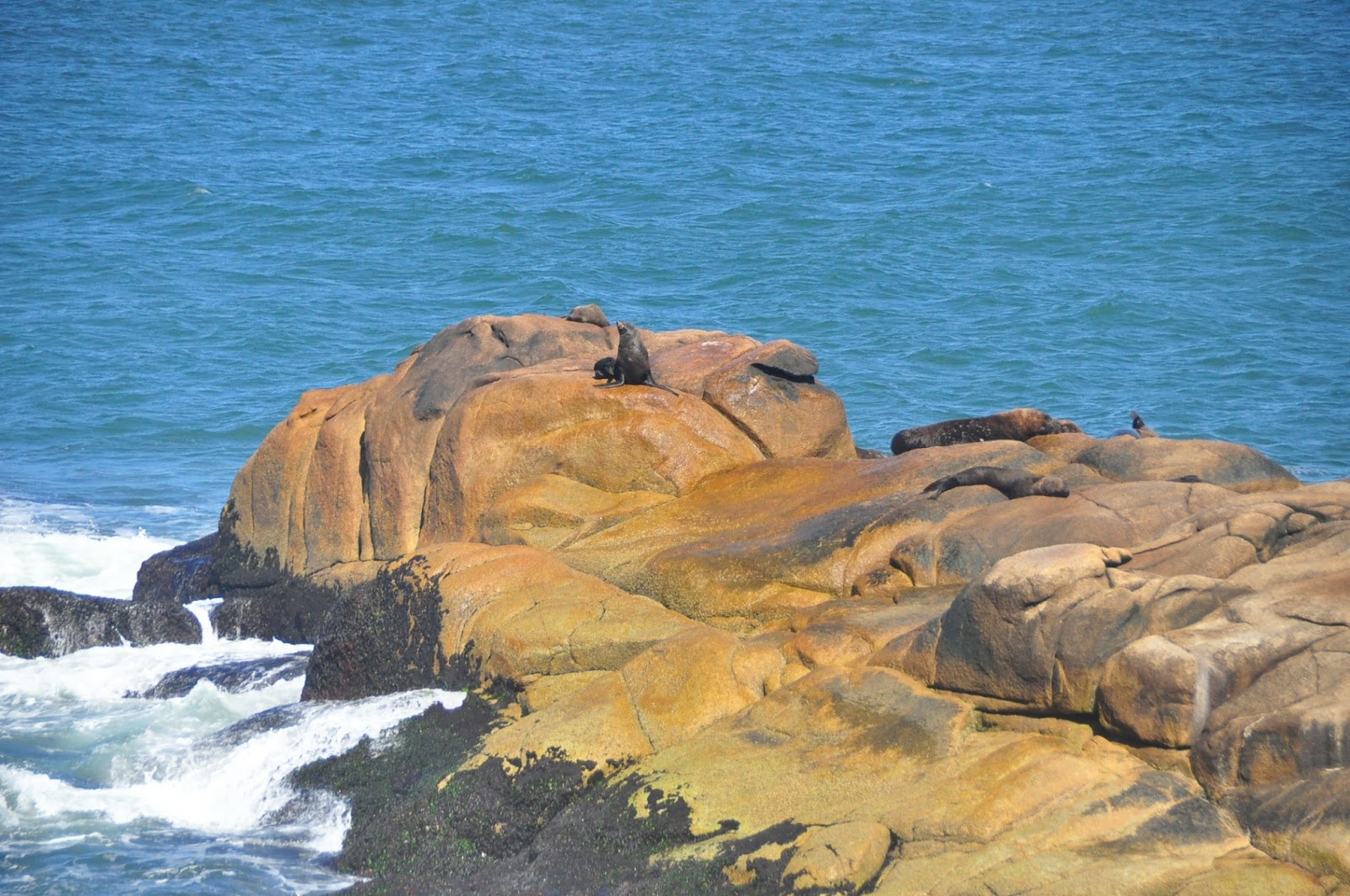
We started off to Cabo Polonio at noon. It was supposed to be a free land for hippies who built personal houses with different colors and styles. However, now it became so touristy that it was not free anymore and only touristy place. There we saw a few sea-lions left from the larger crowd who stayed for summer earlier. If it was summer there should be penguins as well. After we saw the lighthouse we took a local truck connecting to the main road. I would rather like the truck crossing the desert, but it went around it.


When we got to the mainroad, we tried the first successful hitch-hiking in Uruguay. At the back of a small truck of a family we went for 10km to near the Paloma, another beach town and it was more expensive than the previous one due to the tourist business. Therefore we went to the nearby smaller town Costa Azul, where we found a small church with water for clean-up. Then we walked to the end of the coast to find a place to camp. We could have found some vacant house to stay in the balcony facing the sea, but it was a risk that we needed not to take, given some natural habitat nearby. It was also another comfortable night with shelters of trees from the wind. In the next morning, we were less lucky than the previous one and the sun just came out from the cloud in the horizon. On the coast of Costa Azul there were supposed to be whales and we did see some fins of whales in the far end of the sea !

There was a port on our way between Costa Azul and La Paloma; we thought about trying luck to see any sailboat on the way to Punte del Este or even Montevideo. Without luck we sat there and saw only a few boats. One was a sailboat with canadian flag, probably on a long trip, given the gas tank at the stern and the solar cell hanging out. Accepting the reality that there would be no free boat trip going south, we went to La Paloma, hang around in the less interesting beach and light house. We then started the hitch-hiking journey back by going south.