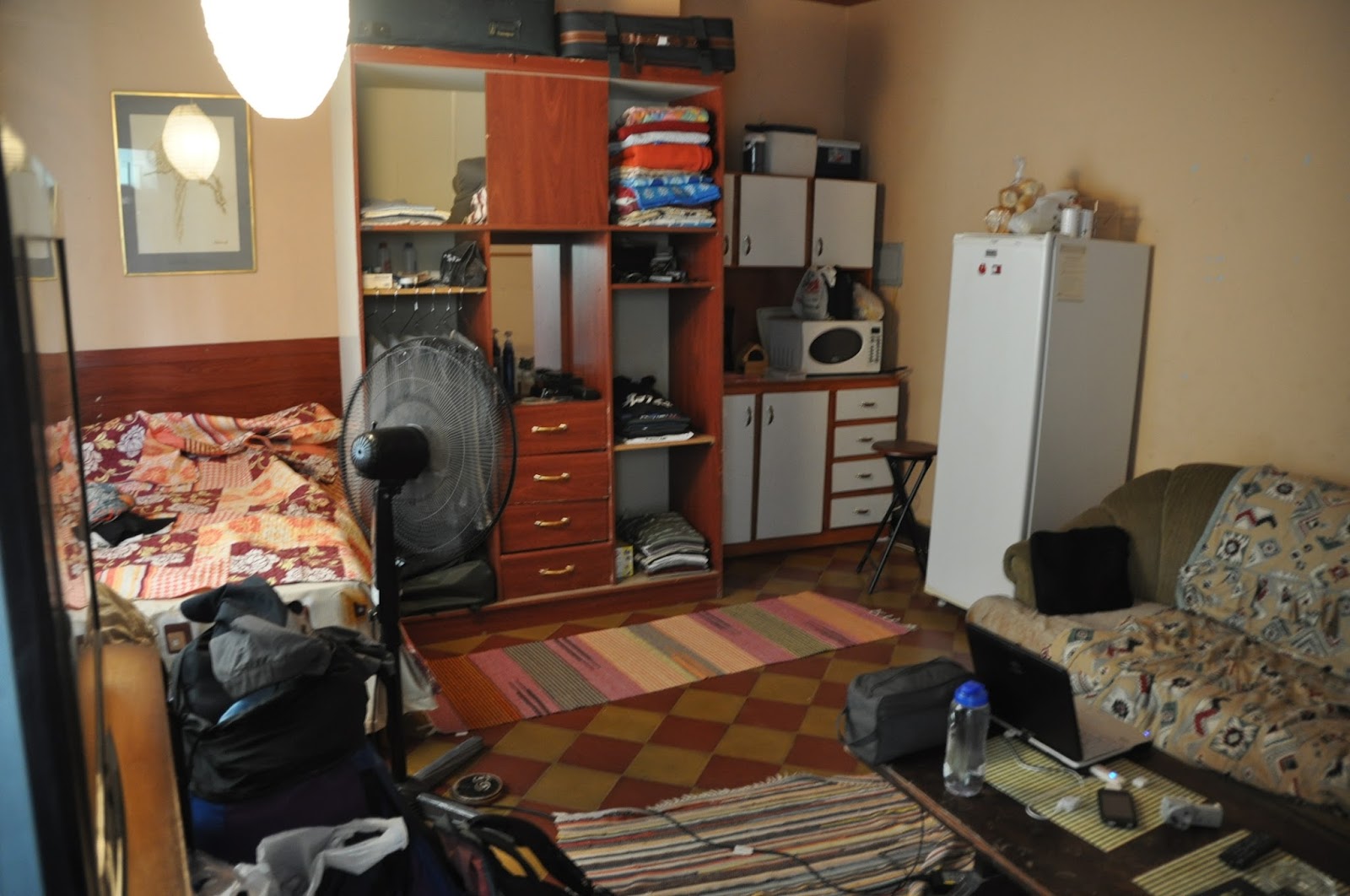
Thanks to Cesar, an English teacher and a welcoming host, we could stay in Encarnacion for one week and visit the major historical sites. All of which were small town set up by the Spanish missionaires coming
to the new land to spread the word of God to the aboriginal Guarani people. The sites were scattered around the area covering south-western Brazil, north-eastern Argentina and much of Paraguay. They brought technology, agricultural
skill, medicine, literature, music to the local people, who could garantee some food consistency and safety from attack of other tribes, but in return the ethnic identity of these aboriginals faded as generations went on.
We went to the ruins (called reduccion locally) in
both Paraguay (Trinadad, Jesus, San Cosme) and Argentina (San Ignacio
Mini, Nuestra Senora De Loreto). When I thought back, I did not see much
of the point
why we visited these ruins so much. In terms of history, this 16 century
archeology could not be compared to other ancient culture like Eygpt,
India and China; how the missionary diluted local aboriginal was also
less interesting
to me, who always detests such practice in the name of God. We turned
out doing what the tourists mostly did in this area.
According to the advice from guidebook and tourist
information center, we went to Jesus. There was no direct transport but
we took a very old taxi from the main road. It was so old that it needed
to be push
from the back to slide down and start the engine. After one hour and a
half we reached the site, which was only the remain of half a church. It
was so quiet that there were only us there at some point, also a cat,
which we
took many pictures of her and the ruin that could make a profile. We
were there till late afternoon and found that the expected bus did not
show up. Preparing to walk all the way back to the main road (11km,
about 2hours),
we were lucky that we did the first hitch-hiking in life by having a
small working truck taking us back to the main road. Then we turned to
Trinidad.
the relic guardian
curious cat
waiting for 1.5 hour and still no bus
It was a larger and more established site. With more remains of the houses of the “Indian”, a larger church with museum showing many sculptures. We were a bit late when we got there and missed the sunset
view of the site. It was the night show in mind that we stayed longer. Before that we took pictures of the stars with the ruin by over-exposing the camera, but we must stay away from the night of the nearby residence. I really
disliked them being so near to the ruin; it would have been a good stary scene with the ruin but their lights were enough to take away the athestic of the scene. Finally the night show came. Although it was led by a Spanish
speaking guide, the mixture of music and light made the whole ruin so transquil that our tireness of the whole day was swept away. In fact I like the stars background more than the artificial light, of which the different
colors made the natural color of the wall (commonly redish brown) so unnatural. After the show finished, we went to the road and waited for the night bus back to Encarnacion.
The next day we went to San Cosme, where the ruin was built for astrological purpose too. Due to that purpose a new planetarium was built for the visitors, it introduced basic astrology like eclipes, solar
systems etc. Being the only visitors of the day, we were given the one-to-one lesson (in spanish) on basic astrology. At least we learnt how to recognize the stars such as the southern cross and the scorpion. Then we were shown
the relic, which was the church still in use for mass and sunday school.
Although we brought lunch, Maria seemed eager to try a local restaurant. We went to Stella’s house next to the relic; only it had a board saying “restaurant” and we were the only customers in there. With
a lot of writing and sign language, we ordered a fish soup and a hardly grilled steak with onion and rice, costing 50,000G. Then we walked to the riverside as suggested to a staff in the museum, with Eduardo’s photo (a bikini
girl enjoying sunshine on the beach with open sight without another side of the river), in mind. Finally in 20 minutes we walked to side and only saw a very small beach with lots of branches on the coastline; also a military
station with a big guy who suspected we were infiltrators and asked us for passport. I just gave him a photocopy and said my passport in hotel, for fear that he took away our passport for money. We were then let go and the
mood of finding another beach ceased. Our bubble burst too.
We finally learned how to make sopa Paraguay (a cake made of maze and cheese) from another host. Silvio is a gentle and caring man who wants to make sure if we feel comfortable in his place. He even gave
us his room and he went to another room of the house. He lived with his sister and her son (i.e. his cousin) Martis. We were quite impressed by the 12 yr old Martis who was a good boy. He greeted with us when meeting and we
saw him have good conversation with adults. He liked naruto comic and drew pictures about his favorite comic characters and showed them to us. We compared those Hong Kong kids who play electronic games or parents’ iphone
day and night and lost social and conversational skills. Silvio’s sister was also a talented woman who took care of the son, worked and did housework.
On the weekend after we arrived Silvio took his mother to a village in another province, thus brought us along. We had a good sight of the Paraguay country side. We were surprised to know that the mother has
not seen her sister in the village for 15 years ! Because of poverty and mobility of family they haven’t met for such a long time. Silvlo was concerned that we may feel uncomfortable about the poor situation in village.
However, we felt more honor to witness this important moment and we like to meet people no matter what they are from. After three hours of car trip we finally went to the village. His mother were greeted with enthusiasm and
happiness, she was very moved about going back to another home and meeting her family. At first we were worried that we had started a bit late (noon, we saw his mother waiting eagerly in the morning) and reached there at 3pm,
thus she did not have time to talk with them if we left the same day. In fact she would stay until next weekend when Silvio would go back to pick her up. We saw the family talking together; I wish that I could understand. Actually they were talking in Guarani, a language from aboriginal whom the Spanish missionaries came to "civilize", instead of Spanish. We had a hard time in learning Spanish already, and now learning a few extra on another language.
Silvio
taught us some Guarani to say “Ro-ei-hu” (I love you), “Ba-da-ko" (how are you), “Ser-ra-ra-hah-le" (my name is ....) The country did a good job of maintaining this aboriginal language, from a culture conquered by colonist, while other countries like Brazil and Argentina
which let the colonial Spanish become their only language and the aboriginals lost their identity because of the loss of their language. In Paraguay, Guarani and Spanish are two official languages. People learn Guarani in school; if their mother tongue is Spanish; or learn Spanish for vice versa. There are still many local folk songs sang from Guarani. We heard some from the singer we met in Asuncion.
We stayed at Silvio’s place for three more days before we bought a bus ticket to go to Encarnacion (later I was a bit regretful to stay such short as we could have gone to other suburban area). We had a good time in his place where we learnt some Paraguay cooking from his sister. His dog was also
very friendly. We also watched some films at his home as he had a collection of local and foreign films, including one Argentine independent film Chinese tale” about an only-spanish speaking metalware shop owner who Was
a loner, taking care of an only-Chinese speaking man, who is an ophan coming to Buenos Aires finding his uncle but got robbed. It was a pity that we left in his work time and we couldn’t say goodbye face-to-face with
him. haler we thought that we should stay in Asuncion longer for her beauty and having this comfortable place to stay. Thank you, Silvio I wish to see you later.
Being a small city/town, Encarnacion has an artificial coastline of river where people can enjoy the beach, sand and water. The water was shallow but good to chill out under the hot sun. We enjoyed an afternoon with terere and dipped in water. Later Tzveti joined in and we had a good time in an outdoor concert where we listened to traditional Paraguay and Guarani music. It was a good end of our last day in there.
Eduardo’s house is in a middle class community; a few blocks away is a luxurious community of double price. We stay in his son’s room for 3 days. It was a comfortable place. Better is that the kitchen is
big where we made a good chinese meal on a Friday party. He invited friends and also a professional singer and guitarist. He sang local Paraguay and Guarani songs and gave us a great night. As for our cooking, it was an adventure
for the whole process. Eduardo took us to a Chinese food store where we bought bean curd, sha cha (sand and tea) sauce, frozen dumplings, rice vermicelli, black beans, sesame sauce, frozen shrimp (Maria’s idea to make shrimp
in sweet and sour sauce) and very yummy freshly made spicy bamboo soot. The shop was opened by Taiwanese and we had some chat with the shopkeeper. At 7pm we were still buying ribs, chicken wings, beef strips, chicken heart,
liver and kidney and vegetable in the supermarket. We started cooking at 8pm. As people were coming we made quick appetizers: fried dumplings, cold noodle in sesame sauce, bean curd in sesame sauce and bamboo soots. The guests
seem to like the dumplings more than the other three. Then we made Shanghainese style sweet and sour ribs, chicken wing in Sha-cha sauce, shrimp in sweet and sour sauce and fried rice.
The pork was finished in 5 minutes, but there was leftover for cold noodles and bean curd. We can only blame for the bean curd which was for fried but not for cold eating. Anyway, all were satisfied and we
still haven’t made the black bean beef fried rice vermicelli. We drank a lot of beer and wine and party till 4am.
Later we also learnt to make empanadas from Eduardo’s mother Margarita. Speaking good English, she was a very talented woman that we both liked her a lot. If only we could stay longer that we could learn a
lot of Paraguay cuisine.
為了息事寧人,我們每人交了二百五十萬(當地錢!即約合共HK$970!)沒有單據,又不知為何海關先生只肯將入境印印在BNO內。(Note: Start of another long story that cannot be told here! AT: 其實係賄款, 之後有朋友幫手攞番, 再講)
南美購物天堂? 巴拉圭的Ciudad del Este與巴西Foz de Iguazu接連,與阿根廷也相當近,相對物價低廉,無論電子產品、電玩、家庭用品護膚品、袋、衫甚至飲食,也有廉價貨供應。除大量百貨公司、盒子式小店、街邊檔,到拿著一兩袋貨便走到街上跑生意的小販,看起來也令我想起深圳或東大門,店舖分佈有點混亂,賣時裝和電器的也可以是一家。其價錢亦其實只是一般香港價,或在那之上 - 視產品而定。(但當巴西賣的家庭用品,香港十元店的那種,是香港的五倍,找到香港價的大陸貨已算不錯了。)
US Dollar is King! 原來他們口中的Dollar是指美金。而所有店舖也收美金、巴拉圭紙、巴西Reias及阿根廷Pesos。而以美金現鈔購物的話,最為實惠。而大部份商店也以美金列價,百貨公司化妝品部會提供現金九折、信用咭九五折的優惠,再次証明對很多小國而言US dollar is king!
廢物滿街 下午四時,走回街上,許多店舖已關了門。看看旅遊書,原來這𥚃政府辦公室的工作時間是7am至1pm 或2pm,而銀行的辦公時間是星期一至五8am至1pm。我想Ciudad del Este的店舖營業時間,主要取決於其顧客,巴西人或阿根廷多會即日來回、早出晚歸(家)的來購物,三、四點已是回家的時候。那時,街上所見盡是廢物,包括紙箱、包裝紙、膠袋和垃圾,這城市每天裝箱、拆箱,想很快便被這些廢物堆滿了。
晚餐 晚餐,本來想在街角的parilla (BBQ)吃。吃午飯的店已關,另一條街上,有幾家馬路邊的街頭小檔,除BBQ、還有三明治和熱狗等簡餐。那BBQ其實只有串燒牛肉(3串Gs.10.000,約HK$20,送麵包及木薯條)、雞肶(無帶紙筆, 只帶了iPhone,問極都唔知幾多錢)及大肉腸。後來我們回到酒店街上的Hotel Austria Restaurant,吃了一碟二人前的豬手、燒肉、腸仔、德國酸菜盆,加上生啤,及送餐包,吃不完仲打埋包,合共Gs.94.000 (約HK$180)兩人食兩餐,抵!
We were fine exiting Brazilian border in Foz do Iguacu, but when we entered Ciudad del Este of Paraguay. The supposedly visa-free BN(O) passports, which were sent by courier with other things (the fuel bottle,foldable water tank and unnecessary clothes) in great cost, got problem in the immigration. The staff said the chops previously in the HKSAR passport should be in the new passports and thus claimed us to pay G530,000 (aboutHKD 1,000). Without Paraguay cash in that amount I had to rush to a nearby shopping mall to from ATM, leaving Maria behind. I should have given her the walkie-talkie. The bus driver could not wait anymore because the bus wassupposed to go to Asuncion (another five hour trip). He dropped our luggage next to the office and our outer tent was left on the bus (we later found that out). I paid the money but there was no receipt and there was no changefor the G600,000 I paid. Although I did not understand what the staff said, they said something in a playful way. These made me smell corruption and bribery. I got the chance that I took the money back as they just put thepile of note on the desk casually. They shouted something at me and seemed to likely cancel the chops they put on our BNO passport (that was strange, shouldn’t they chop on the HKSAR passport with all previous chops ?).With the bus and Maria behind, I could not argue with them anymore but to leave the money and take the passports back. Frustrated by such bureaucracy and corruption, we entered Ciudad del Este. If I had left the walkie-talkieto Maria, I would rather let the bus go, take the backpacks and stay in the simple office blocking operations for protest (until they gave up and let us in).
taken from bus seeing people walking along the bridge
Leaving the family in Joinville, we went to Ciudad del Este, Paraguay in the hope that we can buy a good backpack with bargain price for Maria, who had a hard time on the old backpack. With great help from Eduardo
our Joinville host we went to the bus on time. We are so used to the long distance bus, of which the stuffy air-conditioning and moldy sofa scared us to cover from head to tail.
We were greeted by Mr Big Nose in the hotel
...also the attention-seeking boy
In Ciudad del Este we found an air-conditioned room with breakfast and wifi for just G150,000 (around HKD300) a night. Hoping to buy something cheap in return, also thinking about our next couchsurfer host
Eduardo who would kindly take us to Asuncion and his way back, we took the room after other more expensive choices. The town was a really a shopping mall in South America. Many goods, especially clothing, were sold in bulk.
Electronic products were sold much cheaper than in Brazil, but similar prices in Hong Kong (that means more expensive than in China or for any produce made in China). With that in mind, we were less attracted by that. We kept
looking for outdoor gear shops, but mostly they were selling fishing gears. We bought a battery charger with rechargeable batteries costing US$7. We paid in credit card in Paraguay Guarani and got exchange in an unfavorable
rate (USD1=G5000, while local money exchange shops only change G4300). We should have pay in US dollar cash as we had some. Paid by US dollar things did sell in good price there, so Maria bought face-washing cream (USD3.5),
a good water-bottle (USD8) replacing a broken one. That’s it. It seems not a deserved trip to stay behind in this town not buying the backpack we want.
There were lots of packaging rubbish on the street when the shopping streets in the town were closing at around 4pm. It also became a nearly-dead quiet community when shops closed. People came from the border
early in the day, did shopping and/or business and left on the same day. With a town like that, many people come to do business and shop and leave quickly, it is difficult to expect many people loving her and the local residents
may have a hard time to do anything long-term to build the community. That makes me think about Hong Kong. While agriculture and possible industry can make locals live and build the city. Commerce, finance and tourism alien
them from their own land. The more we are developing the latter aspect the more difficult to help us think long-term about the city, so do the government officials and politicians who are educated to do business but not to
cultivate.
In the same evening we went to the restaurant of Hotel Austria next to us. It is one in German background, we went there for the “Munich” set that was so big with sausage, the yummy soar vegetable and the
pork knuckle. We could not finish in one go but with a lunch box (Thanks to Carrie, a very good gift from Hong Kong to Buenos Aires) we took away for the lunch next day. The dinner was not expensive and costs only G130,000
(with chop beer).
The next day we went on finding any outdoor gear shops. Without success, we packed early and went to find Eduardo who left an address of his insurance company. The local taxi driver was a very nice and honest
guy who made sure if we found the right place instead of dropping us on the street of nowhere to find the address. After a long wait when we sorted out our photos and blogs and he was working, we finally started the way to Asuncion at 7pm.