Tuesday, March 27, 2012

Back to the more modern and expensive city - Montevideo


After 19 hour of comfortable bus trip, we reached Montevideo in the morning. It took us some time to find a free internet line in the bus station to get the skype and contact our new CS host Pedro. Not sure about the arrival time I said we would be there at 4pm, we turned out having 4 hours to wait for him back from work. It was kind of the security person who let us put down the backpacks covered and we went out for a walk. His place was near to the bus station and there was a co-operative supermarket, which ran in a special way with cheaper mechandizing so that they can sell product in cheaper price. People in pension and subsidy could join membership for discounted shopping. Certainly it could not compare to farmer’s market, as we later found out, but it was an acceptable choice in this expensive-to-live city (a litre of beer cost U$50 ~USD2.5, compared to Paraguay costing around USD2).

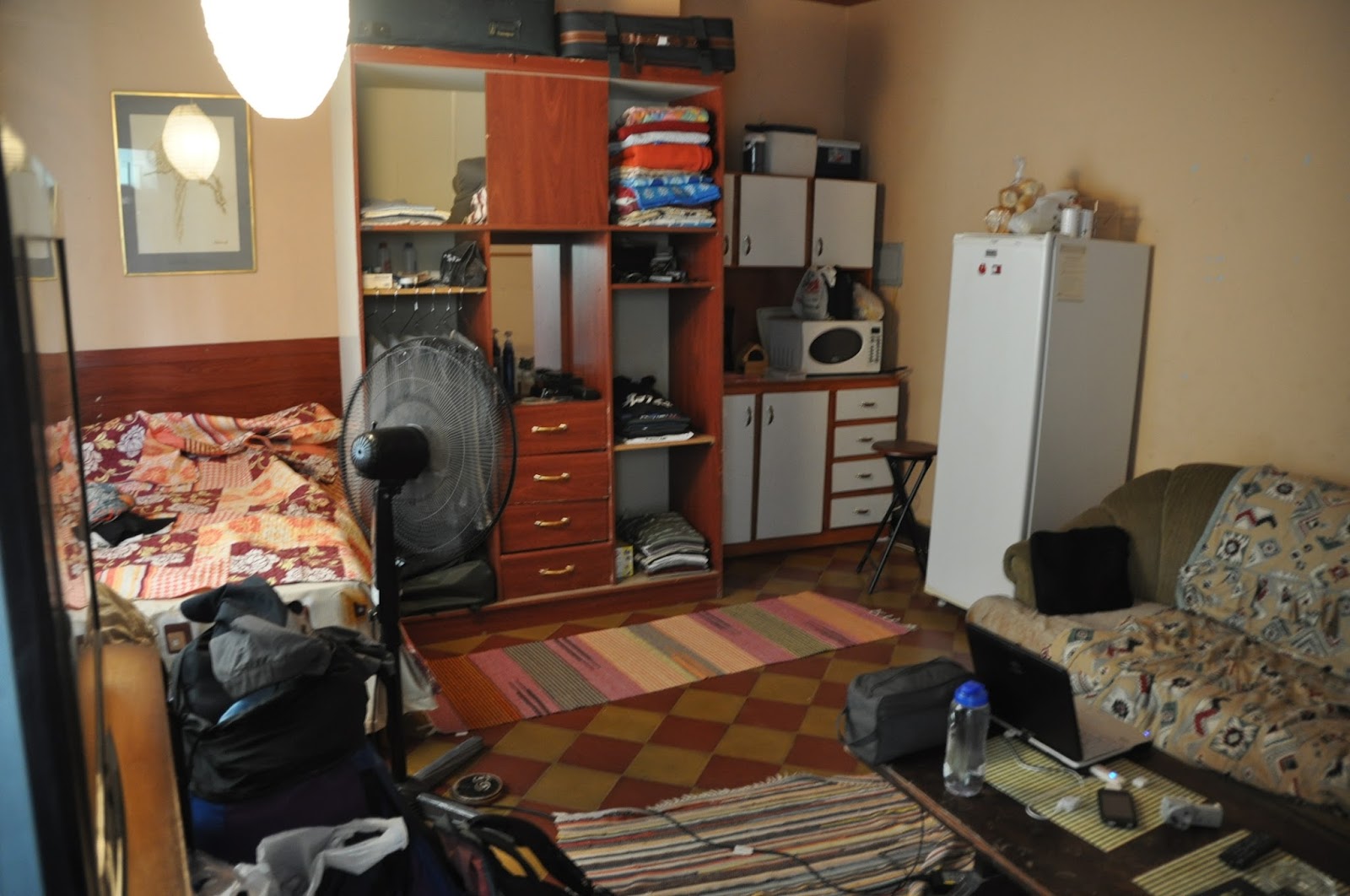
Finally we met Pedro, he just moved to the new place for a few months. As an IT professional, his home had what we mostly want : wifi. We could have stayed at his home for a whole morning updating our blog, contacting friends and family in Hong Kong, finding the next couch-surfing, the cheapest cross-atlantic flight ticket if possible etc. He also had two bikes that we had a good afternoon riding a bike along the coast. But before the coast we had to ride along busy road that was not easy for bike-newbie like Maria. She also gave me a hard time putting the chain back to her bike after doing something which a biker doesn’t do : changing gear and pedal backward while standing. My hands were all black after this, one good thing about the consequence was that I needed to cook that night. It was steak in Pedro’s kitchen which only had a microwave oven with grill function. We did improvise on that the first night to make a dinner for five by making fried rice and chicken (I was still proud of that).


We stayed at Pedro’s place for two more nights, which was a little unexpectedly short in our and his views, but we had another host offering a place in Libertad and we would like to see more people, so we went. Our stay with Pedro was comfortable and happy, with his friendliness and considerateness. Another day when we came out to the downtown and got late after tango, he was willing to let us stay for a night so that we could save some transportation back to the suburb. We wish him a good living in the new place and the home improvement projects (such as the projector, kitchen stove and others) go well.

Tuesday, March 20, 2012

又是長途車 - 從巴拉圭到烏拉圭

車站歎過壺熱mate,7pm在巴拉圭Encarnacion上車,經過大橋20分鐘即達阿根廷Posadas。今次坐Sol的semi cama,過巴拉圭關只須留在車上。但在阿根廷那邊則要拿著所有行李過境。


到了Posadas,在車廠內的專屬餐廳享用晩餐。雖然無choice,但總算有人serve。頭盆empanadas、餐飽、主菜雞扒通粉、紅酒啤酒任飲、甜品camomile custard,也算豐富。回到巴士,亦有自助水機提供水及熱咖啡 (AT: 熱咖啡加巴拉圭出品威士忌係乜嘢嚟?)。


吃過晚飯,正式出發,播完safety video,居然還有一套英語對白、西語字幕的action movie睇。好像叫Take Five,有靚跑車、有追逐場面、有索女、有大隻男、有爆炸...雖聽不清楚內容也甚有娛樂性。


上午四點半,睡到矇矇矓矓,司機叫下車,原來已達烏拉圭邊境。阿根廷與烏拉圭出境及入境的櫃檯只是一步之隔,櫃檯後的長桌子也好像是共用同一張。


車子往Salto走,真想下車泡個溫泉呢!

Monday, March 19, 2012

Stationing in Encarnacion for the visit of Jesuit Guarani Missions - II


With the pretty Bulgarian Tsvetty who was also couchsurfing, we went to San Ignacio Mini, a Jesuit Guarani Mission on Argentine side on the other day. We went to Posadas and took another bus San Ignacio; the whole trip took 2.5 hours and the border crossing was easier than that in Ciudad del Este. The San Ignacio Mini was more established for tourists than the mission site in Paraguay. More establishment also meant high entrance fee, but at least there was English translation of the exhibit description, audio recording of catholic songs modified with Guarani creativity. There were also audio information boxes (with different translations) set up in each important spot of the relic such as church, workshop, plaza etc. With such a good establishment it attracted more tourists and we had a hard time to find solitude.


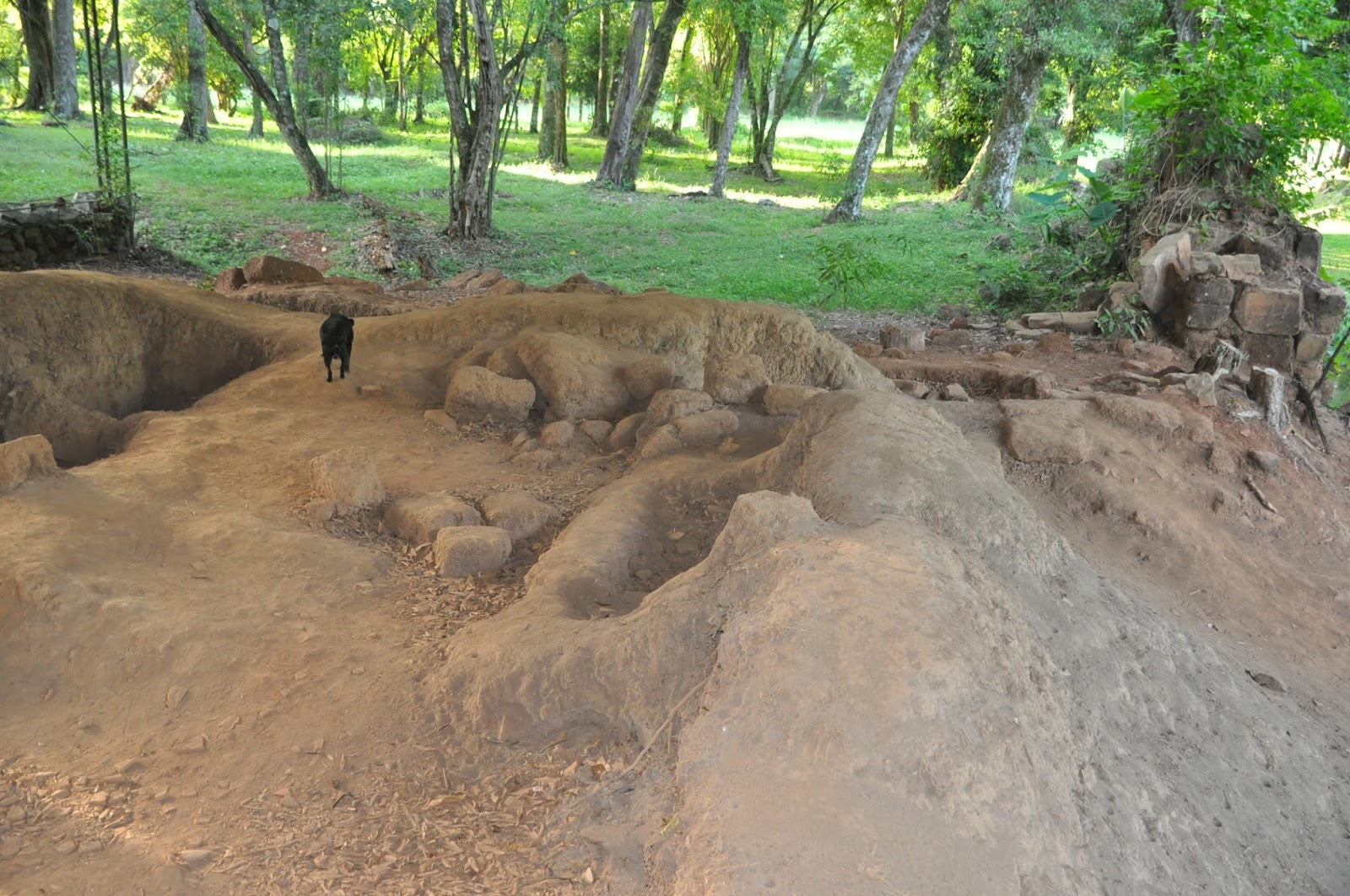
Then we took a local bus to Loreto another site 10 km away. There were much fewer relics left but trees growing around. Without explanation from a guide, we just saw stones scattered around in a forest. The guide was very patient, first explaining in Spanish and then in English to us. We saw the effort of how the archeologist recovered the site bit by bit from a relics of 3 centuries ago and trees outgrew everything. She also showed us the tree branches used for making hammock. I climbed on it and it was soft but very tough; what an amazing material for the hammock.


Finished the visiting, we just found out that the last bus to Santa Maria, another ruin, passed and we had to wait another hour for the bus back to San Ignacio. While we were in perplex, the group of three who were in the same tour with us offered to take us back to Posadas. I would rather think that a guy in the group was interested in knowing Tsvetty; and he certainly asked for her email address and facebook account. Back to Posadas at 7pm, we called the local CS person who had invited us for meeting but turned out to be far away at that time. We hang around for cheap food and finally took cheap hotdogs. Then we took the bus back to Encarnacion.

Certainly Maria and I were not satisfied with the hotdogs, so we found a nearby parrilla and had a good final dinner in Encarnacion (thanks to the money returned from the immigration with the help of the samurai).


Saturday, March 17, 2012

巴拉圭週末家庭樂

巴拉圭人平日作息定時,七點、七點半起床返工返學,黃昏吃飯前聚在庭前飲冰凍的Terere(熱版為Mate,亦即南美茶,一桶水、一支飲筒、一隻杯,便會傳來一家人或一圈朋友一起飯)、或吃口煙,然後一家會一起吃晩飯,再在門前乘涼,吃口煙,明日又要早起。


但到了週五、週末,他們習慣聚在親友家開party!看哪親友家庭院大,便聚在哪裡。大人們九點、十點才吃飯,飲飲汽水、啤酒,談談天、說說地,一直hea到三更夜半。


以下是我們在兩個寄住家庭,想弄點中菜一起吃的兩段有趣場景:


武士之家(男主人中山律師有一半日本血統,但已是百份百巴拉圭人)
星期五
下午六時
「好嗎?我換件衫便出駕車帶你出去買餸吧!」
「不怕大晚嗎?中菜要切、要yip,亭多功夫的。」
「沒問題,我們星期五習慣很晚才吃飯。」
「那要做多少人的菜呢?」
「十五人吧,可能更多。」
「嘩!」
「太多人嗎?我還請了位樂手,特地為了歡迎你們呢!」
「利害!」
「有些親友或許是吃了飯才來的,九點、十點才吃飯也不是問題!」
(到了一家韓國超市、再到了一家台灣超市,買了一點點)
「還是到本地的超巿罷,我們有肉有菜便成。」
「那好,但先要接兩個孩子放學。」
晚上八時半,終於回家開工,邊吃邊做,二十人的菜,弄到半夜完成!菜單包括:酸棘筍、煎餃子、凍豆腐、冷麵、醬燒骨、甜酸蝦仁、沙茶煎雞翅、雜菜炒飯、炒珍肝,時間不夠,豉椒牛肉炒米只好留待明天午餐。


拉丁之家
星期六
晚上七時
「今晚由我們做飯吧!」
「真的嗎?今晚會到家姐家吃,讓我吿訴她一聲。你要什麼材料?」
「她家有什麼也行,可用中式的方法做。」
「先在庭院坐一會,飲一下Terere吧!」


晩上八時
「你家姐住得遠嗎?」
「不遠。」
「那我們走過去嗎。」
「不,我朋友會駕車接我們。」


晩上九時
「我們走了!」
「好的。」(裙拉衭挒中)


超市
「下車吧,要關門了。」


終於,十人的菜,一小時完成!(進步了,也學乖了!)菜單包括:雞絲炒麵、雜菜炒飯及家姐弄的肉醬意粉。


壓力是有一點,但也很高興與我們的巴拉圭家庭分享了一個快樂的週末!

Finding the lost outer tent

Remember that our outer tent were left in the bus, when we were dumped by it in Ciudad del Este? Thanks to the help of Ela in Assucion calling the bus company when we were still in Ciudad del Este and the bus was on the way to her city, it was kept in the garage there. In the stay in ciudad del este i always had to worry about how it went and made sure our message got across to Ela or how our schedule in Assucion matched the time of finding the tent and not bothering our host so much. When we wanted to burn mosquito coil did we realized that we lost another bag holding it and my old pair of sneakers. I was less upset about losing that because it could be obtained somewhere else, but the outer tent was a must for the rest of the trip, in case we camped anywhere.

Luckily when we went to Asuncion, Eduardo drove us to the garage twice (there was no one in late afternoon of Friday) and on the next visit we could get into the garage. Fabio, a member of staff there who kept that for us, was not there. Eduardo called the his mobile phone and great we found him (calling mobile phone was not easy in south America) and finally we got everything we wanted.

A lot of thanks to Ella, who made the contact the bus company early so that it didn’t throw away our stuff as if they were rubbish; Eduard who drove us to the garage, which was not around the bus terminal or the downtown that transport to there was another hassle; also the member of Pluma staff Fabio who kept the stuff for us.

Friday, March 16, 2012

Stationing in Encarnacion for the visit of Jesuit Guarani Missions - I


Thanks to Cesar, an English teacher and a welcoming host, we could stay in Encarnacion for one week and visit the major historical sites. All of which were small town set up by the Spanish missionaires coming to the new land to spread the word of God to the aboriginal Guarani people. The sites were scattered around the area covering south-western Brazil, north-eastern Argentina and much of Paraguay. They brought technology, agricultural skill, medicine, literature, music to the local people, who could garantee some food consistency and safety from attack of other tribes, but in return the ethnic identity of these aboriginals faded as generations went on.

We went to the ruins (called reduccion locally) in both Paraguay (Trinadad, Jesus, San Cosme) and Argentina (San Ignacio Mini, Nuestra Senora De Loreto). When I thought back, I did not see much of the point why we visited these ruins so much. In terms of history, this 16 century archeology could not be compared to other ancient culture like Eygpt, India and China; how the missionary diluted local aboriginal was also less interesting to me, who always detests such practice in the name of God. We turned out doing what the tourists mostly did in this area. 

According to the advice from guidebook and tourist information center, we went to Jesus. There was no direct transport but we took a very old taxi from the main road. It was so old that it needed to be push from the back to slide down and start the engine. After one hour and a half we reached the site, which was only the remain of half a church. It was so quiet that there were only us there at some point, also a cat, which we took many pictures of her and the ruin that could make a profile. We were there till late afternoon and found that the expected bus did not show up. Preparing to walk all the way back to the main road (11km, about 2hours), we were lucky that we did the first hitch-hiking in life by having a small working truck taking us back to the main road. Then we turned to Trinidad.


the relic guardian

curious cat


waiting for 1.5 hour and still no bus

It was a larger and more established site. With more remains of the houses of the “Indian”, a larger church with museum showing many sculptures. We were a bit late when we got there and missed the sunset view of the site. It was the night show in mind that we stayed longer. Before that we took pictures of the stars with the ruin by over-exposing the camera, but we must stay away from the night of the nearby residence. I really disliked them being so near to the ruin; it would have been a good stary scene with the ruin but their lights were enough to take away the athestic of the scene. Finally the night show came. Although it was led by a Spanish speaking guide, the mixture of music and light made the whole ruin so transquil that our tireness of the whole day was swept away. In fact I like the stars background more than the artificial light, of which the different colors made the natural color of the wall (commonly redish brown) so unnatural. After the show finished, we went to the road and waited for the night bus back to Encarnacion.


The next day we went to San Cosme, where the ruin was built for astrological purpose too. Due to that purpose a new planetarium was built for the visitors, it introduced basic astrology like eclipes, solar systems etc. Being the only visitors of the day, we were given the one-to-one lesson (in spanish) on basic astrology. At least we learnt how to recognize the stars such as the southern cross and the scorpion. Then we were shown the relic, which was the church still in use for mass and sunday school.


Although we brought lunch, Maria seemed eager to try a local restaurant. We went to Stella’s house next to the relic; only it had a board saying “restaurant” and we were the only customers in there. With a lot of writing and sign language, we ordered a fish soup and a hardly grilled steak with onion and rice, costing 50,000G. Then we walked to the riverside as suggested to a staff in the museum, with Eduardo’s photo (a bikini girl enjoying sunshine on the beach with open sight without another side of the river), in mind. Finally in 20 minutes we walked to side and only saw a very small beach with lots of branches on the coastline; also a military station with a big guy who suspected we were infiltrators and asked us for passport. I just gave him a photocopy and said my passport in hotel, for fear that he took away our passport for money. We were then let go and the mood of finding another beach ceased. Our bubble burst too.


That's our best picture on the coast of San Cosme


Thursday, March 15, 2012

在Encarnacion途中

柔揚的Guarani音樂,從長途車的揚聲器緩緩深出,車子餐舊的椅背叫我痕癢,小販不斷上上落落,販賣手機、四仔、水果、冰水、汽水,幸好最後出現了熱騰騰的chiperia(本地芝士飽,Gs.1.000兩個=HK$1.933)。這次車程才六小時而已

Tuesday, March 13, 2012

Comfortable stay in Asuncion - II


We finally learned how to make sopa Paraguay (a cake made of maze and cheese) from another host. Silvio is a gentle and caring man who wants to make sure if we feel comfortable in his place. He even gave us his room and he went to another room of the house. He lived with his sister and her son (i.e. his cousin) Martis. We were quite impressed by the 12 yr old Martis who was a good boy. He greeted with us when meeting and we saw him have good conversation with adults. He liked naruto comic and drew pictures about his favorite comic characters and showed them to us. We compared those Hong Kong kids who play electronic games or parents’ iphone day and night and lost social and conversational skills. Silvio’s sister was also a talented woman who took care of the son, worked and did housework.


On the weekend after we arrived Silvio took his mother to a village in another province, thus brought us along. We had a good sight of the Paraguay country side. We were surprised to know that the mother has not seen her sister in the village for 15 years ! Because of poverty and mobility of family they haven’t met for such a long time. Silvlo was concerned that we may feel uncomfortable about the poor situation in village. However, we felt more honor to witness this important moment and we like to meet people no matter what they are from. After three hours of car trip we finally went to the village. His mother were greeted with enthusiasm and happiness, she was very moved about going back to another home and meeting her family. At first we were worried that we had started a bit late (noon, we saw his mother waiting eagerly in the morning) and reached there at 3pm, thus she did not have time to talk with them if we left the same day. In fact she would stay until next weekend when Silvio would go back to pick her up. We saw the family talking together; I wish that I could understand. Actually they were talking in Guarani, a language from aboriginal whom the Spanish missionaries came to "civilize", instead of Spanish. We had a hard time in learning Spanish already, and now learning a few extra on another language.            

Silvio taught us some Guarani to say “Ro-ei-hu” (I love you), “Ba-da-ko" (how are you), “Ser-ra-ra-hah-le" (my name is ....) The country did a good job of maintaining this aboriginal language, from a culture conquered by colonist, while other countries like Brazil and Argentina which let the colonial Spanish become their only language and the aboriginals lost their identity because of the loss of their language. In Paraguay, Guarani and Spanish are two official languages. People learn Guarani in school; if their mother tongue is Spanish; or learn Spanish for vice versa. There are still many local folk songs sang from Guarani. We heard some from the singer we met in Asuncion.

We stayed at Silvio’s place for three more days before we bought a bus ticket to go to Encarnacion (later I was a bit regretful to stay such short as we could have gone to other suburban area). We had a good time in his place where we learnt some Paraguay cooking from his sister. His dog was also very friendly. We also watched some films at his home as he had a collection of local and foreign films, including one Argentine independent film Chinese tale” about an only-spanish speaking metalware shop owner who Was a loner, taking care of an only-Chinese speaking man, who is an ophan coming to Buenos Aires finding his uncle but got robbed. It was a pity that we left in his work time and we couldn’t say goodbye face-to-face with him. haler we thought that we should stay in Asuncion longer for her beauty and having this comfortable place to stay. Thank you, Silvio I wish to see you later.


Monday, March 12, 2012

Visiting the downtown of Asuncion


The bus system was convenient, though the vehicles look like the big nose Mercedes in Hong Kong in the 50s. Better than those buses in Brazil and Buenos Aires, respectively there was no gate to make a blocking nuisance and no machine demanding coins, the bus here only had a driver receiving fares. A trip to the downtown only costs G2300 (around HKD4). We memorize any significant building passing by so that we could know when to take off when back. We took off near a school in the downtown area and were impressed by the layout of the city. It was more like a town center in which citizens’ life was close to administration. Unlike Hong Kong in which the commercial and administrative districts were centralized and isolated away from residence, living here would have the courts, offices, museums and galleries a few blocks away. 

The first place we visited was the Panteon de los Heros (at the middle of a central park, easy to find) which paid tribute to soldiers who died in many wars (some of which were unnecessary). There were several metal plates given by visiting heads of government, including the presidents of Taiwan. It was quite ironic to see that the past and the current presidents, Chen and Ma respectively, were there at the same time, while one was in jail and another was elected for one more term. In the past I have some doubt about Paraguay’s diplomatic relationship with Taiwan, for the sake of advantage given by the later. However, viewing the dictatorship of the communist China, now I was more respectful of this country playing the game between the two countries: On one hand not to be dependent on the advantage of doing business with mainland China, which keeps on bribing her to alienate Taiwan, on the other hand keeps relationship with Taiwan, which treasures any few diplomatic ties. 

Then we walked towards the river and passed the shopping street for tourists. Things sold in here were also tagged in US dollar, a little expesnve due to the proximity with tourists. We found a shop named “Hong Kong” selling mixed variety of goods but we had no interest getting in there. 

Walking on we found a pink building near the river. It was called the “Cabildo” which was the previous congress building and now a national museum. It was free of charge to visit and there was a member of staff who was so kind to take us around. He spoke some English and introduced the exhibits, including the old congress hall for meetings. On the first floor we saw the presentation about the river coast project. It looked beautiful but no one knows when it would finish. Another room showed the artifact of the first president Eusebio Ayala who was respected in the country for his defense against the Argentine’s attack. In another exhibit room we saw the exhibit about the life of Guarani aboriginal: a boat made of a complete trunk of a tree with the special name I forgot. More impressive was their costumes functional to the life in tropical forest. For example, they wore feather of “cucu” (name of a bird) on their ankles so that snakes on the ground would be scared away. There were much more to be seen, and listened, on the second floor. People who played guitar would know Mangoré, a famous guitarist who also wrote a lot of songs for classical guitar. The exhibits also included his written scores. What a treasure ! Another part of exhibit was Paraguai film. A famous film called Paraguai Hemlock won a prize in Canne and the prize was displayed here, but on the bottom shelf of a glass cabinet. Paraguay was also famous for her harp players (such as Espínola). One was ..., that made us eager to listen to a real harp performance. We had such a good time in the Calbido.


The other day we visited the town again and we went into a university “Universidad Catolica” located in an convent school next to the largest church (Iglesia Catedraw). We got all the curious look from the students wondering why we are here. Got some water and rested for a while, we then left and went to the Casa de Independencia, a small free museum showing the life in this city in the past. Then we walked to the Palacio Lopez, a beautiful white palace building by past dictator and the guardian was still very high. A guidebook said advance booking would allow visiting in there, we did not find that on internet so we skipped that. We crossed the street to Manzana de la Rivera, which was an educational art-promoting comericial complex renovated from a few block of old residential building. However, it seemed not a successful project, because there was only a small bar running, a small free museum and a small public library. Other offices supposedly for art administration or non-governmental organization were either closed or vacant. I thought of the west-kowloon “art” complex which could turn to just hardware of building with not much activities really on art development of the city.

Not aware of other sights in the suburb and outside Asuncion, we left a bit early, also missing the meeting with a couchsurfer Gerhard who was kind enough to prepare tea at his home waiting for us. However we were stuck by the rain-storm and could not find the bus to 10 km away Aregas. It was a pity we left to this comfortable capital. We shall come again also hope to meet Gerhard again.